
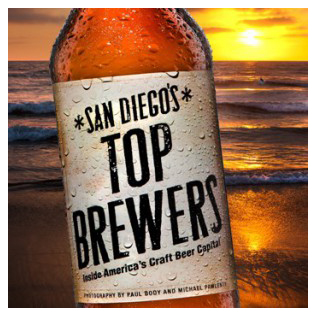
“National publications are calling San Diego the ‘Napa Valley of Beer’ and ‘America’s #1 Beer City’ and beer-related tourism to San Diego is booming” says Bruce Glassman, President of Chefs Press Inc. and writer of, “San Diego’s Top Brewers:Inside America’s Craft Beer Capital.” We invite you to sit in as we talk to Mr. Glassman about the book, beer and what makes SD America’s beer capital.
Bruce says, “I knew a little bit about beer before we first started this project, and I’m proud to say that I learned everything I know now directly from San Diego’s amazing brewers.” No one would disagree
that we are lucky to live in a city that has some of the best professional and home brewers in the Country. Mad scientists in their own right, creating liquid magic for San Diegans to enjoy each and every day. With San Diego’s Top Brewers being released just in time for San Diego Beer Week we knew readers would love to hear what Mr. Glassman had to share about his beer travels while creating the book.
So please join us as we talk to Bruce Glassman about “San Diego’s Top Brewers:Inside America’s Craft Beer Capital.”
1 – About how long has this project been “in the making”? From an idea to print.
All in all, the project took about a year, with 10 months of that being photo shoots, interviews, writing, editing, design, production, and manufacturing (which takes about 3 months with shipping time). Our photographers, Paul Body and Mike Pawlenty did an awesome job of shooting incredible photos on a breakneck schedule–sometimes 3 or 4 shoots in a week. When it came time to design the book and do the production, Amy Stirnkorb stepped up, created an amazing design, and pushed the book through with fantastic efficiency. Without those guys on the team, we never would have made our ultimate deadline of Beer Week for the release.
2 – What was the main goal you were looking to reach by creating this book? When did the idea come about and how?
The idea came about while we were working on our previous cookbook, “From Terra’s Table” which featured beer pairings with each recipe. We had enlisted the help of our friends at Karl Strauss–most notably Ryan Ross–to guide us through the parings. It was at that point that we became aware of all the incredible recognition San Diego Craft Beer was receiving on the national and international scene. When we found out that–at the 2010 World Beer Cup–San Diego brewers won more medals than all of Germany or Belgium, we realized there was a fantastic story here.
The book then became a way to celebrate the great beer being made in San Diego county, and a way to shed light on all the people who have helped to support San Diego brewers and the craft beer movement. Those people–other than the brewers–include the owners and proprietors of the region’s great craft beer bars, as well as the many super-talented chefs who have made beer and beer cuisine a central focus in SD’s culinary profile.
 3 – Did you have a favorite stop along your beer travels while creating this book?
There were so many. Three stand out in particular: The photo shoot we did at Green Flash ended in an epic beer tasting with Chuck Silva. Not only did he personally taste the entire GF lineup with us, he pulled all kinds of special archive beers for us to taste, including the barleywine he made seven or eight years ago, which was incredible. Another really fun shoot was at Lost Abbey, with Tomme Arthur and Sage Osterfeld–we spent most of the day there, and had a really wonderful time tasting and talking beer with Tomme, who’s a great guy and has an encyclopedic knowledge of Belgian-style beers. The third one was at Karl Strauss, when I went to video Paul Segura tasting a lineup of their beers. I remember being super impressed by how great the beers tasted, and by Paul’s passion for what he does. That was another visit that turned into an epic afternoon of really memorable tastings.
4 – You state on the cover of the book that San Diego is the craft beer capital. In your opinion, what makes this true?
Well, as I mentioned already, SD won more medals at WBC than Germany or Belgium–or any country. At last year’s GABF San Diego won a total of 17 medals, and had both the small and large brewpub Brewers of the Year. This year, San Diego took home 20 medals, and had the same small and large Brewers of the Year winners. But the medal counts are only one piece of it. The other piece is the recognition from the rest of the world, which has been plentiful recently. National publications are calling San Diego the “Napa Valley of Beer” and “America’s #1 Beer City” and beer-related tourism to San Diego is booming. The final reason is that the craft beer community has been embraced by so many other people in the county–from the chefs and restaurants, to the civic and municipal organizations–even our mayor has gone on record as an official San Diego craft beer lover.
5 – Why in your opinion is San Diego able to thrive as one of the nations largest beer cities? What about SD makes it so perfect for craft beer?
Part of it is the enthusiastic support that the brewers have gotten from the other members of the community (as above). The other aspect is the closeness between the pro brewers and the home brewers. Most of the pros that I spoke to started out as home brewers and continue to nurture their ties with the home brew community. This relationship keeps the pro brewers creative, and provides a forum for meaningful criticism and important inspiration to “push the envelope” and look for new and exciting recipes and ways to brew.
6 – When it comes to pairing beer and food, what are some things people should keep in mind?
The guidelines are the same as when you’re pairing with wine: you can either pair to complement (pull out a specific flavor or note from the food) or to contrast (add a counterpoint). The two major taste/pairing components in most beers are going to be bitterness (which you get from hops) and maltiness (which you get from malt). One simple guideline I have used–it’s very general but it’s helpful if you’re looking for something basic–is to think of hop-forward beers (which tend to be higher in bitterness) as the “white wines” and to think of the malt-forward beers as the “red wines.” That is to say, when you want something with a lighter mouthfeel, with more “citrus and floral notes”–more “crispness”–then go with the hop-forward beers. When you want something with a fuller mouthfeel, with more “roasty, malty, caramel notes” go with a malt-forward beer.
7 – Were the recipes in the book created specifically for the project??
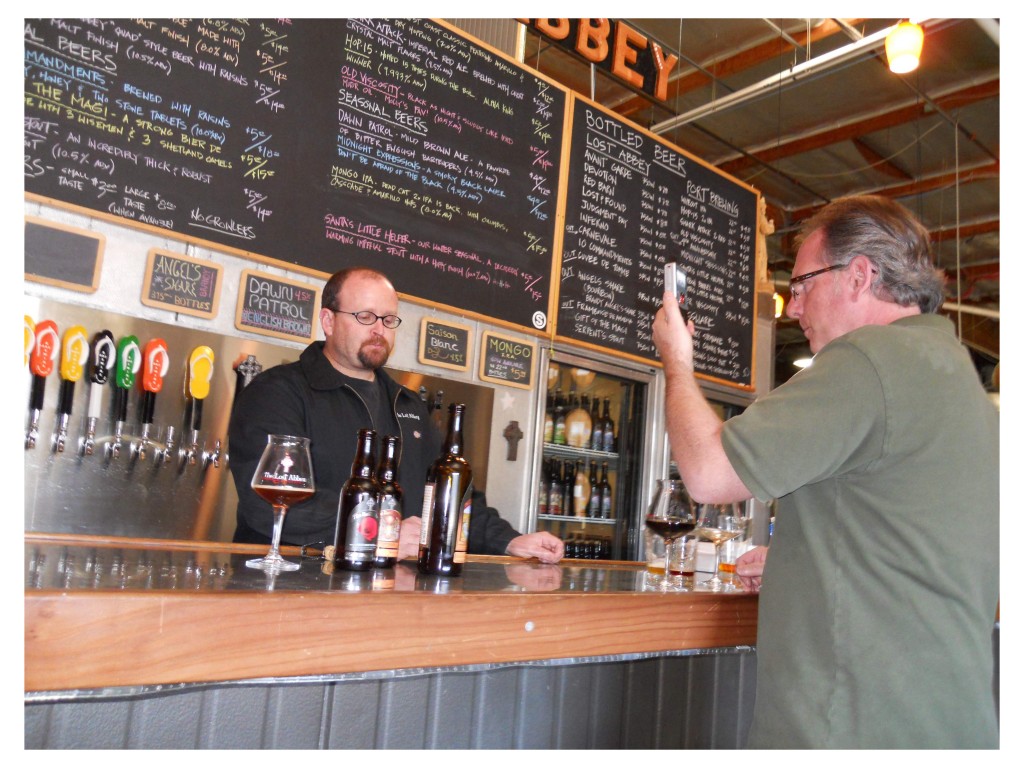
Bruce gets the scoop from Lost Abbey brewmaster Tomme Arthur.
Some, like the ones from Chef Ron Oliver, were created exclusively for this book. Others were taken from special beer dinners that chefs like Kyle Bergman and Schuyler Schultz had done in the past. Still others, were longtime customer favorites pulled directly from the menus of Stone World Bistro & Gardens, Karl Strauss, and Rock Bottom.
8 – For the breweries that don’t house a restaurant / therefore don’t have a chef on hand, how did you find the chefs that are featured?
Mostly, they were chefs that had been paired with a specific brewery and tasked with creating a recipe or menu using that brewery’s beer. This goes on a lot now in San Diego, and is always one of the central attractions of San Diego Beer Week’s closing event at the Lodge at Torrey Pines (this year on Nov. 13).
9 – Of all the dishes inside the book, did you have a favorite?
Oh, man. You know, we had the undeniable privilege of tasting everything that went into the book (we didn’t “style” the food with a whole bunch of inedible products, which used to be the accepted way to shoot food), so picking a favorite is VERY difficult. Chef Gunther Emathinger’s Black Garlic Fondue (paired with Karl Strauss Red Trolley) blew me away, as did Schuyler Schultz’s Bavette Steak (paired with AleSmith’s old Numbskull Barleywine) and Alex Carballo’s Blue Cheese Jalapeno Cheesecake (paired with Stone’s Smoked Porter). I have to also mention Ron Oliver’s Beer Float (made with Manzanita’s Rustic Horizon), which is the most delicious 7-minute recipe I’ve ever tasted!
10 – What are some of the things you learned about beer while making this book? Brewing, bottling, serving, ect…
I knew a little bit about beer before we first started this project, and I’m proud to say that I learned everything I know now directly from San Diego’s amazing brewers. Probably the single biggest revelation to me was learning about the importance of yeast. It was after shooting our special profile of Chris White and White Labs (a San Diego company that supplies many of the world’s top breweries with yeast) that I took Chris’ book (“Yeast”) home and read it. I actually thought it was fascinating, and it really opened my eyes to the critical role yeast plays in the creation of beer–and to the specific flavors and aromas of beer. You know, if you take the same exact wort (malt-and-hop-infused liquid) and ferment it with two different strains of yeast, the resulting beers will–in many cases–be virtually unrecognizable from one another.
 11 – What are some of your favorite local brews?
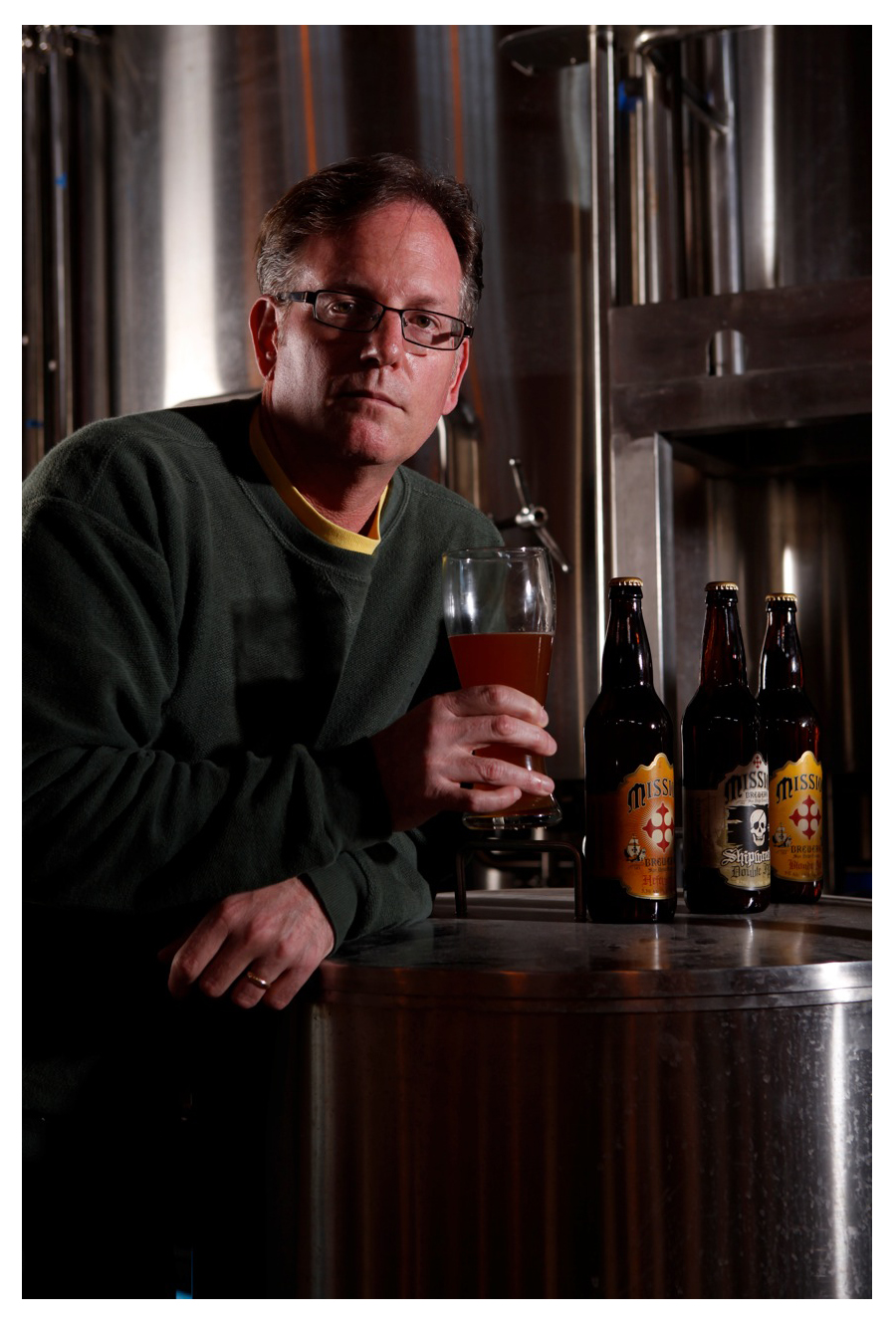
So many, and I’ve grown to love so many different styles. I’ll never pass up a Sculpin IPA from Ballast Point, and the same goes for Green Flash’s Hop Head Red, Lost Abbey’s Red Poppy, or AleSmith’s Old Numbskull. John Egan at Mission Brewery recently gave me a taste of his newly released Dark Seas Stout, which was also fantastic.
12 – When did you become interested in craft beer, and what was the brew that first stole your heart?
I became seriously interested in craft beer at the same time we began this project. That was actually perfect, because it made me approach the writing and construction of this book from the perspective of someone who’s really interested in learning, but not necessarily a total beer geek. The brew that first stole my heart was definitely Sculpin–I had tasted lots of great IPAs before that, but that one made me say “wow”! How different and how excellent!
13 – If you knew someone who was new to craft beer, in what direction would you point them so they could become acquainted?
There’s no substitute for tasting–and paying attention to what you’re tasting. Smell, mouthfeel, aftertaste. The more you pay attention as you drink and try different styles, the more your knowledge will grow. Lots of breweries, bars, and tasting rooms offer “flights” where you can sample a collection of small tasters. I think that’s a great way to sit down and focus on the differences between beers and to see what styles resonate best with you.
14 – What are some of the great events you will be attending that people can look forward to?
San Diego Beer Week (November 4 -13) is the granddaddy of them all. Hundreds of events all over SD County during those 10 days. We are hosting a Book Launch Party for TOP BREWERS on the first night of Beer Week (November 4) at Mission Brewery (1441 L St.) starting at 6:30. We’re expecting more than 25 brewers to be there, and they will be sitting and signing books. On Saturday, Nov 5, SDBW continues with the big Brewer’s Guild Festival at Liberty Station. We are also doing a bunch of signings at other breweries during Beer Week. Go to sdtopbrewers.com and sdbw.org to get more info — and don’t forget to check us out on our facebook page: facebook.com/SDTopBrewers
15 – Where can people pick up their own copy of the book?
Order through our web site: chefspress.com, or visit San Diego breweries, craft beer bars, brew pubs, and many other local businesses. Also available at Warwick’s La Jolla, selected Albertsons stores, and through Amazon and B&N.
We can’t say thank you enough to Bruce Glassman, Amy Stirnkorb and everyone over at Chefs Press Inc. for their generosity and genuine kindness while working together. Special thank you to photographers Paul Body and Michael Pawlenty. (All photos used with permission.) Please visit their websites for more information on events and how to get your copy of the San Diego’s Top Brewers.